Automation: Transforming the Way We Work
Learn why organizations are investing in automation and how it helps teams reduce manual effort, improve consistency, scale operations, and work more efficiently.


Pavithra R
Junior Software Developer


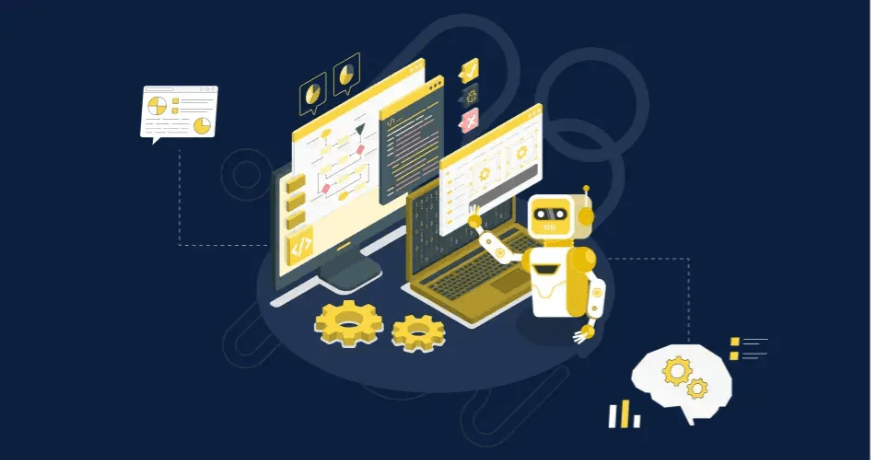
There's one thing I've noticed in almost every workplace I've seen.
Someone has multiple browser tabs open, a spreadsheet on one screen, emails on another, and they're constantly moving information from one place to another. It could be financial reports, customer details, employee records, or operational data, but the process usually looks the same.
- Open the system.
- Copy the data.
- Update the spreadsheet.
- Verify the information.
- Repeat.
Then, after some time, that same task quietly disappears.
Nobody makes a big announcement. Nobody celebrates it. The report is simply available before anyone starts work because a workflow has already completed it in the background.
That's when automation becomes more than just a buzzword.
You don't need to build automation solutions yourself to notice the impact. You can clearly see the difference when a task that once took hours suddenly happens automatically.
Automation has become an important part of digital transformation. From business operations to software development, organizations are constantly looking for ways to reduce repetitive work and improve efficiency.
The more I observe it, the more I realize that automation isn't about replacing people. It's about giving people more time to focus on work that requires creativity, problem-solving, and decision-making.
What Automation Looks Like From My Perspective
The simplest way I understand automation is this:
Using technology to perform repetitive tasks with minimal human involvement.
That technology could be software, machines, scripts, or intelligent systems, but the goal remains the same—to make processes faster, more consistent, and less dependent on manual effort.
What stood out to me is that many everyday tasks don't actually require human judgment.
Things like:
- Copying information between systems
- Generating routine reports
- Sending scheduled notifications
- Checking the same conditions repeatedly
These are exactly the kinds of tasks where automation can make a real difference.
A simple example is reporting.
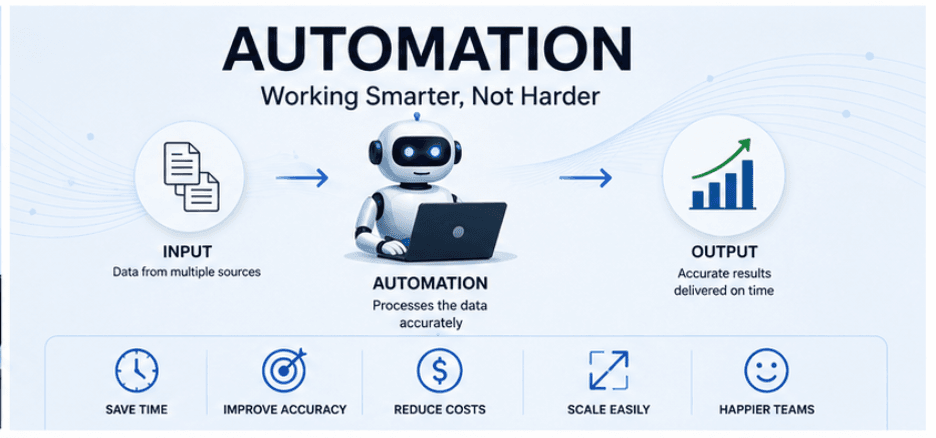
Instead of someone spending every morning collecting information from different systems, preparing a report, and sending emails to multiple people, an automated workflow can gather the data, process it, and deliver the report automatically.
The result is simple.People get their time back.
Why I Think Automation Matters
Automation offers several benefits, but these are the ones that stand out to me the most.
Improved Productivity
The biggest advantage of automation is the time it saves.
Tasks that once required several hours of manual effort can often be completed in minutes or even seconds, allowing teams to focus on more meaningful work.
Reduced Human Errors
Humans naturally make mistakes, especially when performing repetitive tasks.
A missed field, an incorrect value, or a small calculation error can create much bigger problems later.
Automation follows predefined instructions consistently, reducing the chances of these kinds of mistakes.
Better Consistency
When different people perform the same process, the results can vary.
One person may complete a task slightly differently from another.
Automation brings consistency by ensuring the same process is followed every single time.
Cost Savings
Many people assume automation is only about reducing manual effort.
In reality, one of the biggest benefits comes from reducing rework.
When fewer mistakes happen, teams spend less time fixing issues and more time improving processes.
Scalability
One thing I find interesting about automation is how easily it supports growth.
A manual process that works for hundreds of records may struggle when the workload grows into thousands.
Automation makes it much easier for organizations to handle increasing workloads without proportionally increasing manual effort.
Around-the-Clock Availability
People have working hours.
Automation doesn't.
Many automated processes run during the night, over weekends, or on holidays, ensuring work is completed before people even begin their day.
Better Employee Experience
This is probably one of the most underrated benefits.
Most people don't enjoy spending hours on repetitive tasks.
By automating routine work, employees have more time to focus on activities that involve creativity, analysis, and problem-solving.
A Few Things I've Learned
Automating a Bad Process Doesn't Fix It
One lesson I've heard repeatedly is that automation doesn't solve inefficient processes.
If a process is already broken, automating it simply makes the same problems happen faster.
Improving the process should always come before automating it.
The Difficult Part Isn't the Happy Path
Automation often looks simple from the outside.
But real-world processes rarely go exactly as planned.
What happens when data is missing?
What happens if a system is unavailable?
What happens when a file format changes unexpectedly?
Handling these situations is often where the real effort lies.
Maintenance Matters
Automation isn't something you build once and forget.
Applications evolve.
Business rules change.
Systems are upgraded.
Keeping automation reliable requires continuous monitoring and maintenance.
Small Problems Become More Visible
One interesting thing I've noticed is that automation exposes issues that manual work often hides.
When people perform tasks manually, they naturally adapt when something unexpected happens.
Automation follows exactly what's been defined.
If a rule is unclear or required information is missing, the process quickly reveals those gaps.
Looking Ahead
From what I've observed, automation is evolving beyond simply repeating predefined steps.
Earlier automation focused mainly on following fixed instructions.
Today, it's becoming much more intelligent.
Modern systems can understand documents, analyze information, recognize patterns, and even support decision-making with the help of artificial intelligence.
The future of automation isn't about machines doing everything.
It's about creating better collaboration between people and technology.
Machines can handle repetitive work, while people can focus on creativity, strategy, and the decisions that truly require human judgment.
Final Thoughts
The more I see automation being adopted across different industries, the more I understand why organizations continue investing in it.
It's not just another technology trend.
It's solving real business problems by reducing repetitive work, improving accuracy, saving time, and allowing people to focus on activities that create greater value.
One thing I've come to realize is that automation isn't a one-size-fits-all solution. Every organization has its own challenges, goals, and processes, so the right approach depends on the problem you're trying to solve.
Writing this blog gave me an opportunity to reflect on how much automation has become a part of our everyday work. Whether it's simplifying repetitive tasks, improving accuracy, or helping teams work more efficiently, its impact is becoming increasingly visible across industries.
As technology continues to evolve, I believe automation will play an even bigger role in shaping the way we work, not by replacing people, but by allowing them to focus on the work that truly benefits from human creativity, critical thinking, and collaboration.